08.06.2026
International travel has undergone a massive transformation over the past few years. Not too long ago, preparing for a trip abroad primarily involved purchasing paper flight tickets, printing out hotel reservations, buying physical guidebooks, and exchanging physical currency at the bank. Today, however, the way we navigate, experience, and survive in unfamiliar destinations has been entirely digitized. From electronic boarding passes, digital hotel keys, and ride-sharing applications, to digital tour guides, real-time online translators, and booking platforms—the modern traveler relies entirely on their smartphone. This fundamental shift has created an absolute, non-negotiable necessity: a constant, secure, and reliable connection to the internet at all times.
The ever-growing need for instant access to mobile internet abroad has naturally led to a massive surge in demand for better, faster, and more cost-effective connectivity solutions. Traditional methods, such as relying on excessively expensive standard roaming packages from home providers or hunting down local physical plastic SIM cards upon arrival, simply no longer meet the fast-paced dynamics of contemporary travel.
In response to these modern needs, eSIM technology has firmly established itself as the intelligent, modern alternative to physical SIM cards. Without the need for plastic, without the hassle of airport queues, and without complex manual configurations, it is rapidly becoming the industry standard. An ever-increasing number of tourists, business professionals, and digital nomads are transitioning to this digital format due to its unparalleled convenience, complete flexibility, and the ability to drastically reduce travel expenses. In this comprehensive article, we will explore every aspect of this technological revolution and explain in detail why switching to digital mobile plans is changing the rules of travel forever.
In the simplest terms possible, an eSIM (Embedded SIM) is an entirely digital SIM card that is already factory-built into the hardware of your modern device. Unlike the classic physical SIM card—which requires you to visit a physical store, purchase a piece of plastic, break it out of its frame, and carefully insert it into a tiny slot using a metal pin—the physical element is completely absent here.
No plastic SIM card is required whatsoever, which not only makes the entire process incredibly convenient for the user but also plays a significant role in reducing global electronic waste. The installation of your new travel plan happens entirely digitally. Most commonly, this is done by simply scanning a provided QR code with your smartphone’s camera or through direct automatic activation via a specialized mobile application. This seamless process writes the necessary network profile directly onto the embedded microchip, allowing you to connect to local mobile operators in a matter of seconds.
The embedded chip inside your smartphone is fully rewritable. This means that you can download various distinct profiles for different countries and switch between them via software, using just a few taps in your phone’s settings menu. There is no need to open your device, risk damaging the hardware, or juggle multiple tiny plastic cards in your wallet.
The technology is no longer a niche feature; it is the standard for the telecommunications industry. The vast majority of modern devices come with full hardware support. This includes popular models such as the Apple iPhone (from the iPhone 11 series onwards), Samsung Galaxy devices (from the S20 series onwards), Google Pixel phones (including all the latest flagship models), as well as top-tier devices from brands like Motorola and Xiaomi.
Pilots and cabin crew members who fly between different countries daily rely heavily on this technology to ensure they have immediate access to mobile internet the second the plane touches down, without carrying a collection of plastic cards. Digital nomads deeply value the freedom to work from anywhere in the world, switching their data plans online as they move. Meanwhile, regular tourists choose the digital option simply because it eliminates all the stress and anxiety associated with finding a local telecom operator in an unfamiliar country where they might not speak the language.
For a huge portion of mobile users, utilizing standard roaming outside the borders of their home network carries serious financial risks. While regulations within the European Union have created a comfortable "roam like at home" environment, traveling outside of this specific zone frequently leads to unpleasant surprises and shocking phone bills.
One of the primary reasons travelers are abandoning traditional roaming is the presence of astronomically high fees outside the EU. When your phone connects to a foreign network on another continent, your home operator begins charging you based on tariffs that often exceed normal prices by a massive margin. Billing by the megabyte makes even the most basic tasks, such as loading a navigation map to find your hotel, an incredibly expensive luxury.
Furthermore, there is the massive, often ignored problem of hidden background traffic. Modern smartphones are engineered to be constantly connected to the web. They automatically update applications, sync high-resolution photos and videos taken during the day with cloud services (like iCloud or Google Photos), constantly check for new emails, and fetch push notifications. This entire process occurs silently in the background, generating a massive amount of data consumption that you only become aware of when you receive your monthly invoice.
Even when consumers proactively purchase special overseas travel packages from their home operator, they frequently encounter severe speed restrictions and strict Fair Usage Policies. Once a certain, usually quite small, data limit is reached, the internet speed is artificially throttled to a point where it becomes practically unusable for anything other than plain text messages. You can read more about this technical phenomenon in our detailed article: Why Unlimited EU Roaming Slows Down.
Modern travelers demand predictable, transparent costs. With digital plans, you pay a fixed, upfront price and receive an exact volume of mobile internet, completely free from hidden fees and the risk of exceeding your budget. Here are several excellent examples of popular destinations where advance preparation is absolutely mandatory:
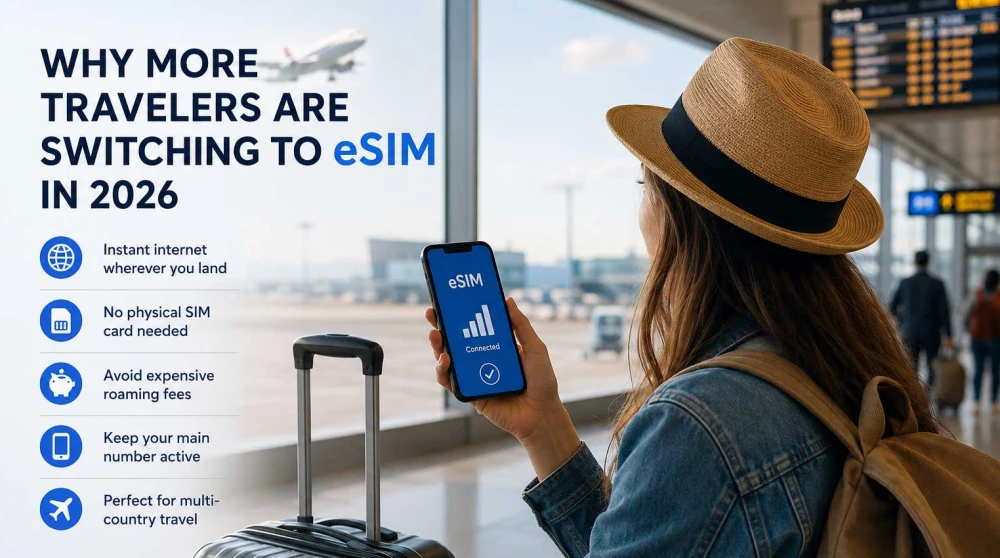
Perhaps one of the most impressive, sought-after, and genuinely relieving advantages of the technology is the ability to secure connectivity literally the second you arrive at your destination. Imagine the classic travel scenario: after a long, exhausting, and cramped flight, the airplane finally lands. While you are waiting for the cabin doors to open, you simply switch off airplane mode on your smartphone.
Because travelers can activate their internet plan prior to departure (while relaxing at home on a reliable Wi-Fi network), the phone automatically locates the local cellular network and establishes a secure connection. This completely eliminates the dreaded necessity of hunting down SIM card kiosks scattered across massive, confusing international airport terminals.
Not only do you save valuable vacation time, but you also bypass the tedious passport registration queues that are mandatory in many destinations. The online verification process takes about 5 minutes, providing you with immense comfort and peace of mind before you even pack your bags. Always ensure you carefully read the package you are purchasing to fully understand the included data limits and validity periods.
Having mobile internet available immediately after arrival means you can instantly launch your navigation apps to find the fastest route, order a taxi or an Uber to bypass the aggressive airport transfer touts, contact your hotel reception to confirm your check-in time, and make secure online payments right there in the terminal. This immediate travel connectivity transforms the entire arrival experience, turning what is usually a stressful and chaotic process into a smooth, pleasant, and highly efficient transition. With instant activation, accessing mobile data abroad has never been more accessible or straightforward.
Planning a grand journey that spans multiple different countries has traditionally been a logistical nightmare when it comes to telecommunications. In the past, crossing every single new border meant finding a new currency exchange, purchasing a brand new local card, getting a new temporary phone number, and enduring a new registration process.
eSIM technology entirely resolves this complex issue by introducing comprehensive regional and global data plans. Travelers who are visiting multiple countries during a single trip no longer require a handful of different SIM cards. A single digital profile can be programmed to work flawlessly across 30, 40, or even over 100 countries. When you cross a physical border on a train or in a car, your smartphone simply authenticates and transfers to the next network operator without dropping the connection for more than a few seconds.
Because we work with established operators across the globe, we can guarantee that your device will always connect to a robust, high-speed network, no matter where your itinerary takes you. This makes the technology absolutely perfect for extensive tours across Europe, adventurous backpacking trips through Asia, or cross-border road trips where continuous GPS navigation is critical for safety and convenience. Instead of constantly worrying about local telecom providers, you get to sit back and actually enjoy the changing scenery.
Explore these excellent options for borderless travel:
In the era of modern digital communication, your personal phone number is much more than just a tool for making voice calls. It serves as your primary digital identifier across countless platforms. In the past, utilizing a local prepaid physical card meant that you had to forcefully remove your main home SIM card from your phone. This inevitably led to a frustrating sense of isolation—people could not reach you during emergencies, and you instantly lost access to critical services tied to your number.
Modern smartphones elegantly solve this exact problem through the Dual SIM feature, which works in perfect harmony with digital profiles. You can dive into your settings and configure your device so that your main, physical SIM card remains completely active in the background. This is exceptionally important for several reasons:
Simultaneously, your new eSIM profile takes over the sole responsibility of providing high-speed mobile internet. This operational model truly grants you the best of both worlds. You can keep your WhatsApp active (since the app uses your number for identity but routes the actual messages over whatever mobile internet is active), securely receive vital OTP/SMS codes from your bank, and completely avoid the very real risk of losing or physically damaging your tiny home SIM card while traveling.
Flexibility is a top priority for anyone who is constantly on the move. Even though local physical SIM cards still exist as a viable option in many airports around the world, they bring along a multitude of inconveniences and hidden frustrations that the digital alternative completely eliminates.
First and foremost, there is no need to visit local mobile stores in unfamiliar, potentially unsafe neighborhoods. There are no language barriers where you find yourself struggling to explain to a vendor—who may not speak English—exactly how much data you need and for how many days. Most importantly, there is no physical swapping of plastic cards. Attempting to open the SIM slot of your expensive smartphone with a paperclip or a tiny needle while sitting on a crowded airport bench or in the back of a moving taxi carries a massive risk. If you drop your home card, you lose your contacts, your access, and your peace of mind.
Furthermore, managing your travel plan is significantly easier when it can be done directly from the bright screen of your phone. You can monitor your data consumption in real-time, check your remaining balance, and easily top up your mobile internet if you feel that your initial package is running low, all without ever stepping foot inside a physical store.
Local Physical SIM Card:
Digital eSIM Profile:
The widespread adoption of eSIM technology is occurring at an incredibly rapid pace, fundamentally reshaping the entire global telecommunications landscape. Today, the vast majority of modern smartphones are manufactured with built-in hardware support for this exact technology. Major tech giants such as Apple, Samsung, Google, Motorola, and Xiaomi are aggressively pushing this standard forward. In certain markets, such as the United States, the newest smartphone models are even being sold completely without a physical SIM card tray, which clearly dictates the irreversible direction in which the mobile industry is heading.
This massive hardware transition is heavily supported by overwhelming consumer demand. Airline pilots, business travelers with tightly packed schedules, digital nomads who change locations on a monthly basis, and everyday vacationers are increasingly relying exclusively on digital profiles for their communication needs. Because we work with established operators worldwide, we ensure uncompromised service quality for all these diverse user groups, maintaining high speeds and broad coverage.
The overarching reality is undeniable: eSIM is rapidly becoming the absolute gold standard for travel connectivity. This is no longer merely a niche piece of technology reserved for hardcore tech enthusiasts; it is a mainstream, highly accessible, and absolutely mandatory convenience for every modern traveler who values their time and money.
Despite the massive penetration of the technology into the mainstream market, many consumers still harbor a few technical questions and understandable concerns before making the transition for the first time. Here is a detailed mini-FAQ section that provides clear answers to the most common inquiries:
The accelerating adoption of eSIM technology is far from just a passing trend; it represents a fundamental, permanent evolution in the way we stay connected when we travel beyond the borders of our home countries. This massive shift is driven by several key factors that directly address the pain points of the modern consumer.
The primary focus is placed on the absolute convenience of being able to organize everything related to your connectivity in advance, right from the comfort of your own home. The incredible flexibility to switch between different data plans and countries with the simple push of a button completely transforms how itineraries are planned. The most crucial advantage, however, remains the ability to successfully avoid absurd roaming fees, thereby protecting your hard-earned travel budget. Combine this with the magic of instant connectivity the moment your plane lands, and the invaluable ability to keep your main SIM active for critical calls and banking codes, and it becomes abundantly clear why traditional plastic cards are being left in the past.
Proper preparation is the ultimate key to a successful, peaceful, and entirely stress-free journey. Modern connectivity technologies have proven themselves to be practical, highly affordable, and exceptionally secure solutions that every single traveler should seriously consider. Remember, the online verification process takes about 5 minutes. As always, make sure you carefully read the package you are purchasing so you know exactly what is included.
Whether you are traveling to Asia, Europe, Africa, or the Americas, eSIM technology makes staying connected easier than ever before. Prepare your mobile internet prior to your departure, take control of your expenses, and enjoy your global adventures without boundaries or limitations.
An eSIM is a digital SIM card that is already built into your phone's hardware. You do not need to insert or remove a physical plastic card. Installation is done via software—simply scan a QR code or activate the profile through your device to get access to fast mobile internet.
Travelers choose this technology for its convenience, flexibility, and the complete absence of surprise fees. You can organize your mobile internet entirely online, and the process takes about 5 minutes. However, it is always important to carefully read the package you are purchasing to ensure it covers your specific travel needs.
Yes. If you install your digital plan before departure, your phone will automatically connect to the local network the second you turn off airplane mode. This gives you instant mobile internet for navigation, ordering transport, and contacting your hotel.
In most cases, yes, especially when traveling outside the European Union. Prepaid digital plans give you full control over your expenses and protect you from unexpectedly high mobile internet bills generated by hidden background traffic.
Absolutely. Modern smartphones support the Dual SIM feature. You can configure your device so that your main physical card remains active for receiving calls and important SMS messages (like banking authentication codes), while the new digital profile is used exclusively for mobile internet.
Yes, there are specialized regional and global plans that cover multiple countries simultaneously. When crossing a border, your device will simply connect to the next network without you having to drop the connection or buy a brand new plan.
It is much more convenient because it eliminates the need to search for physical stores at the airport, communicate in a foreign language, and carry a paperclip or safety pin to swap tiny plastic cards. Everything is managed digitally right from your smartphone's screen.
Most plans allow you to share your mobile internet (hotspot) with other devices, such as laptops or tablets. However, it is always best practice to carefully read the package you are purchasing to confirm whether this specific feature is included in your plan.
Yes, most new devices on the market fully support this technology. This includes Apple models from the iPhone 11 series upwards, Samsung Galaxy S20 and newer, Google Pixel devices, as well as flagship phones from brands like Motorola and Xiaomi.
Yes. We work with established operators worldwide. This means your device will connect to the same reliable cell towers and premium antennas used by the locals, guaranteeing you stable and high-quality mobile internet everywhere you go.