13.03.2026
How to get internet in Morocco without paying roaming fees? Here you’ll find eSIM solutions, coverage details, and practical tips to stay connected during your trip.
Morocco is a country that captivates the senses—from the vibrant colors of spices in the markets of Marrakech to the endless sands of the Sahara. Whether you plan to lose yourself in the narrow streets of the old Medina in Fes, surf the waves of Agadir, or explore the modern architecture of Casablanca, one thing is certain: mobile internet will be your best friend. In a country where navigation is often a challenge and the language barrier can be a factor, real-time access to the network completely changes the experience.
During your trip, you will rely on your phone for much more than just photos. Navigating Marrakech is nearly impossible without Google Maps, as the city is a labyrinth of thousands of small alleys that are often not marked on paper maps. Communication in Casablanca and Agadir with local guides, hotels, or taxi drivers requires a stable connection via WhatsApp. Traveling to the Sahara Desert requires serious logistics, and the ability to translate menus or signs via a mobile app makes your stay safer and more comfortable. ➡ Therefore, internet is almost mandatory for tourists in Morocco.
When you land in the Kingdom of Morocco, you will face several choices for connectivity. Traditional methods include purchasing a local SIM card at the airport or using international roaming from your home provider. However, roaming is associated with huge and often shocking bills at the end of the month, as Morocco falls into the most expensive data zones. Searching for a local telecom office and the mandatory passport registration can take hours out of your vacation, and the language barrier during card setup can be frustrating.
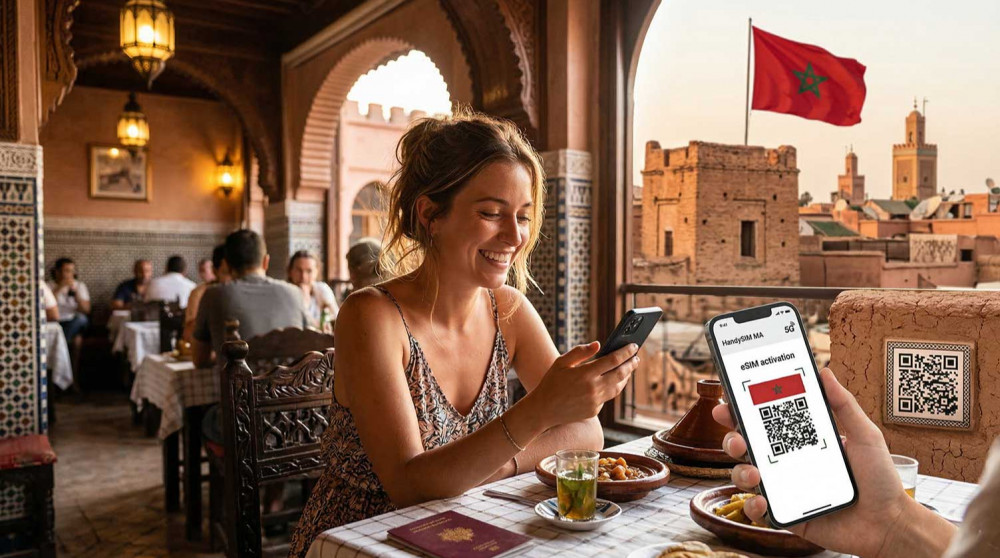
With the advent of modern technology, eSIM (digital SIM card) has established itself as the most modern and efficient solution for travelers. It allows you to choose a suitable data package before you even leave home. This way, the moment the plane lands and you turn off airplane mode, you are already connected to the local network. There is no need for physical card swapping, no risk of losing your original SIM card, and no need to search for WiFi passwords at airports. ➡ eSIM is undoubtedly the easiest option for tourists in Morocco.
To understand why savvy travelers choose digital solutions, let’s compare the main methods of accessing the internet:
| Method | Price | Convenience | Activation | Security |
| eSIM | Low / Controlled | Very High | Instant (Digital) | High (Encrypted) |
| Local SIM | Medium | Must find an office | Physical (Requires Passport) | Medium |
| Roaming | Extremely High | High (Automatic) | No setup | High |
| Public WiFi | Free | Low (Location specific) | Often requires registration | Low (Risk of hackers) |
If you want to avoid the queues and have internet as soon as you step off the plane, check out our offers here:
👉 Mobile Internet for Morocco – eSIM Plans
The telecommunications market in Morocco is controlled by three major companies that offer competitive services and good 4G coverage. Our international eSIM plans automatically connect to the strongest available signal, ensuring you continuous access.
Morocco has made a huge leap in its digital infrastructure. In main tourist centers like Marrakech, Casablanca, Rabat, Tangier, and Agadir, 4G signal is almost ubiquitous. You can expect speeds that allow for seamless YouTube video streaming, high-quality video calls, and fast photo uploads to Instagram.
One of the most exciting experiences in Morocco is an overnight stay in the Sahara. When you head to Merzouga or the dunes of Erg Chebbi, keep in mind that you are in one of the most isolated parts of the world. The signal around the villages at the base of the dunes is good, but once you head deep into the sands, it disappears. This is the time for a "digital detox." It is recommended to inform your loved ones in advance that you will not have a connection for 24 to 48 hours during these tours.
The Medinas in Morocco are historical monuments with unique architecture—thick stone walls and extremely narrow streets where the sun rarely reaches. This type of construction acts as a natural shield for mobile signals. When you are inside a traditional Riad (hotel), your phone's signal may drop significantly. Most Riads offer WiFi, but as soon as you step out into the street, your mobile data via eSIM will be restored and will guide you through the labyrinth.
Upon landing at the airports in Marrakech, Casablanca (Mohammed V), or Agadir, you will notice advertisements for free WiFi. Unfortunately, these networks are often overloaded and require complex registration processes that sometimes demand a local phone number to receive a code.
In cafes and restaurants, the situation is similar. While in the modern districts of Casablanca the internet is fast, in small family restaurants it is often slow and unstable, especially during peak hours. Owning a personal eSIM gives you the security that you won't be deceived by fake WiFi networks (a common practice for data theft) and will have access to your banking apps and personal information at all times.
Morocco is not a country where it is easy to orient yourself by signs. This is why internet is the key to your peace of mind:
It is important to choose a package that won't leave you stranded in the middle of the desert. Here is how data is distributed:
➡ Our recommendation: For a 10-day trip, a 10GB package is the absolute minimum for a stress-free stay. If you plan to upload a lot of video content or work remotely, look for packages of 20GB or more. Remember that you can always top up your HandySIM eSIM via our website within minutes.
Many tourists visiting the Maghreb choose to explore more than one country in the region. This is a great way to experience the diversity of North Africa but requires good preparation for internet connectivity.
Special Tip for Travelers:
If you are planning a larger trip in North Africa, you can use a regional eSIM package that works in more than one country. For example, if after Morocco you decide to visit Algeria, there is no need to buy a new SIM card—combined packages provide mobile internet there as well. The same applies if your route continues to Tunisia, where you can use the same eSIM plan without additional setup. This is an extremely convenient solution for tourists crossing borders who want continuous connectivity without having to search for a new operator or change phone settings at every border crossing. This not only saves money but also ensures you have internet for navigation as soon as you enter the new country. Please, before purchasing a regional eSIM plan, make sure to check which exact countries it covers in the product description.
Morocco is a magical country that deserves to be explored without the stress of missing connections or high bills. The easiest and most modern way to secure mobile internet in Morocco is through a digital eSIM, which is activated online and starts working immediately upon your arrival. With it, you get freedom of movement, security for payments, and the ability to share every magical moment with your loved ones in real time. Prepare for your adventure today and don't let the lack of internet hinder your Moroccan experience.
The easiest and fastest way is by activating an international digital card. You can browse the available eSIM plans for Morocco, which allow you to have a secure connection immediately upon landing. Alternatives include buying a local card at the airport or using expensive international roaming.
For most tourists, an eSIM is the better option as it saves time spent waiting in queues and registering with a passport at local offices. With an eSIM, you also keep your home physical SIM card in your phone, which is important for receiving bank confirmation codes. A local card is only an alternative if your phone does not support eSIM technology.
Yes, 4G coverage in Marrakech is excellent, especially in the new part of the city (Gueliz). In the Medina itself (the old city), the signal may weaken inside buildings due to thick walls, but on the streets, the internet is fast and stable. This allows you to easily use social media and share photos in real time.
Free WiFi is offered in most hotels, riads, and larger cafes, but it is often slow and unreliable, especially in the evening. Public networks at airports sometimes require registration that may not work with foreign numbers. Therefore, it is highly recommended to have your own data package for maximum security.
Google Maps is absolutely vital in Morocco to help you navigate the labyrinth of streets in the old cities. Navigation apps work perfectly with mobile internet and will save you from having to pay local "guides." It is also recommended to download offline maps for areas in the Atlas Mountains or the desert.
The airports in Casablanca, Marrakech, and Agadir offer free WiFi, but it is often overloaded by the thousands of arriving passengers. With an activated eSIM, you won't have to rely on these networks and will be able to order transport or message your loved ones immediately after landing.
Maroc Telecom is the operator with the widest coverage in the country, including remote and mountainous areas. Orange and Inwi also offer excellent quality in major cities and tourist zones. HandySIM digital cards automatically connect to the strongest available signal for maximum convenience.
If your trip includes several countries, you can choose a regional package. This way, you will have internet in Morocco, and then you can continue with the same plan in Algeria or Tunisia. This is extremely convenient for tourists crossing borders who want continuous connectivity without additional settings.
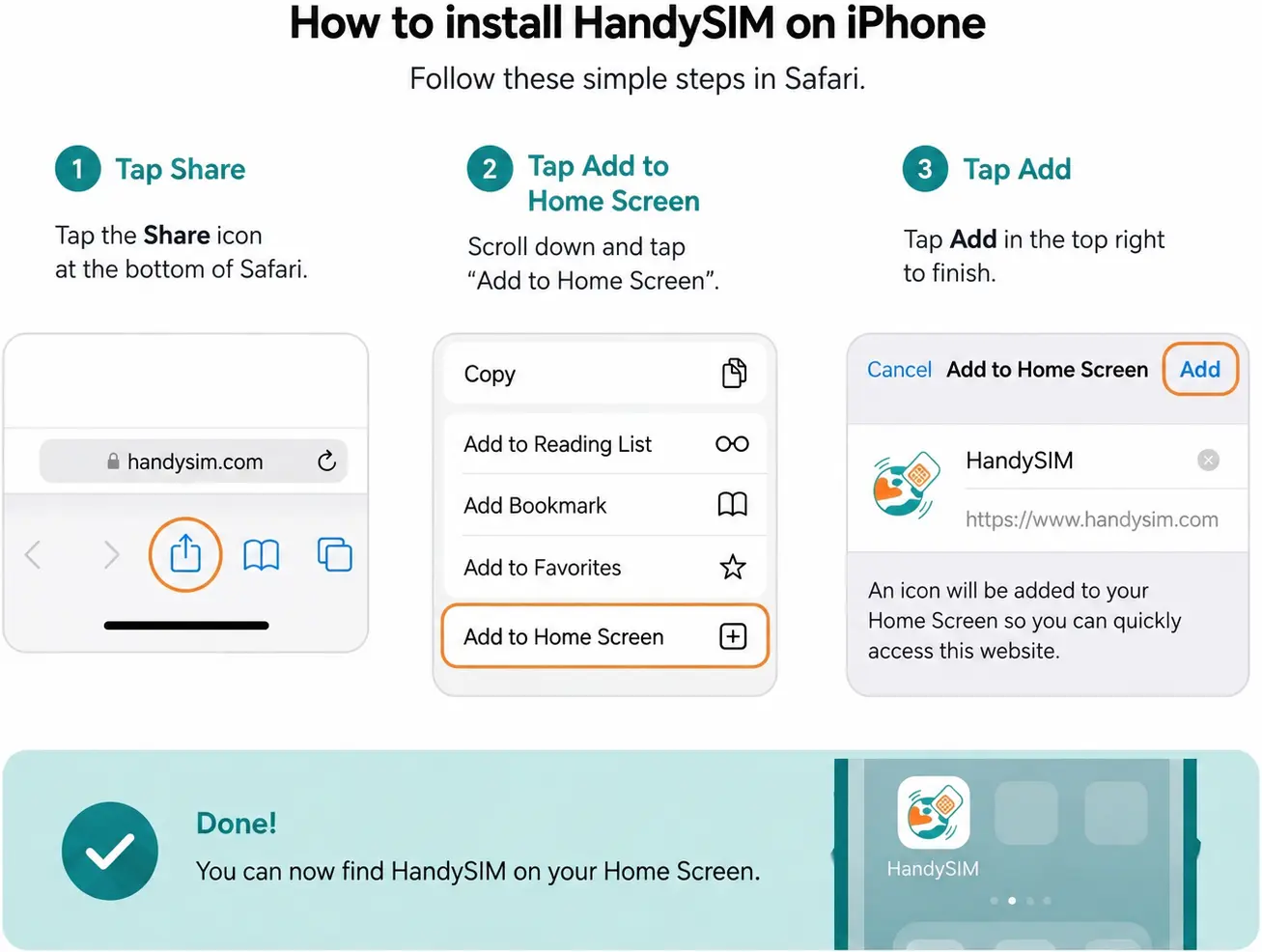
Yes, this is the best approach. We recommend installing the eSIM profile while you are still at home and have a stable WiFi connection. The plan itself will activate automatically when your phone connects to the Moroccan network upon arrival. The entire process takes about 5 minutes and prepares you fully for the trip.
Yes, messaging and voice call apps like WhatsApp, Viber, and Messenger work without problems via mobile internet. They are the primary way to communicate with local hotels and tour organizers. Keep in mind that video calls over WiFi can sometimes be restricted, but they function perfectly over mobile data.