12.04.2026
How to get internet in Chile without paying high roaming fees from the start? This guide covers eSIM options, coverage, and practical tips to stay connected during your trip.
Mobile internet in Chile for tourists can range from surprisingly fast in urban centers to completely non-existent in the wild regions of Patagonia. Chile is a land of extreme contrasts—it is one of the longest countries in the world, stretching over 4,000 kilometers from north to south. When planning a trip here, you must understand that internet in modern Santiago has nothing in common with the connection in the world's driest desert, the Atacama, or among the glaciers in the south.
In Chile, a stable internet connection is not just a convenience; it is a matter of control and safety. Being left without navigation in Santiago or unable to communicate in remote national parks can turn an adventure into a logistical nightmare. Chile is one of the most digitally advanced countries in Latin America, but its geography poses serious barriers to physical infrastructure. Mountain ranges and the rugged coastline often isolate entire regions from standard mobile networks.
👉 Chile eSIM is the best way to stay connected with stable internet in Latin America.
Yes, in large cities and along major highways, the internet is fast, with strong 4G and developing 5G coverage. However, as soon as you enter the Andes, the desert, or the fjords of Patagonia, internet coverage in Chile becomes highly limited. Speeds can drop drastically, and latency may increase due to the immense distances between cell towers.
Yes, eSIM works perfectly in Chile and is the most recommended option for tourists. It allows immediate access to mobile data in Chile without the need for physical registration with a passport at local offices, saving time and preventing language barriers.
➡ The most reliable way to have internet in Chile is an eSIM, activated before your flight.
When you land at Santiago Airport (SCL), you have several paths to ensure connectivity. Here is a detailed overview:
This is the easiest but most unwise choice. Chile falls into the most expensive roaming zone for European operators.
Buying a physical SIM card in Chile is cheap in terms of the package price, but extremely cumbersome as a process.
WiFi networks are available in most hotels and public places in large cities.
This is the modern standard. You buy your package online, receive a QR code, and you are ready.
| Method | Price | Convenience | Speed | Risk |
| eSIM | low | ⭐⭐⭐⭐⭐ | high | low |
| Local SIM | low | ⭐⭐ | high | medium |
| Roaming | very high | ⭐⭐⭐ | medium | high |
| WiFi | free | ⭐ | low | high |
The market in Chile is highly competitive, which is good for consumers. Here are the main players:
➡ Conclusion: Entel is the most reliable operator for mobile internet in Chile outside the capital.
Chile's geography is unique. The country is squeezed between the Andes and the Pacific Ocean. This creates specific difficulties:
No worries here. The internet is on par with major European capitals. 5G signal is widespread in areas like Las Condes and Providencia.
Strong coverage along the entire coast. Ideal for digital nomads who want to work with an ocean view.
In San Pedro de Atacama, you will have a good 4G signal. However, as soon as you head to Valle de la Luna or El Tatio Geysers, the internet disappears completely. The desert is harsh on technology.
This is the most challenging place. In cities like Puerto Natales and Punta Arenas, the connection is good. In Torres del Paine National Park, internet is a luxury. Signal is only available around administrative buildings and is usually weak.
If you plan to cross the country by bus (the popular way in Chile), keep in mind:
Safety in South America often depends on the information you have in real-time.
The short answer is: only as a backup.
If you use your phone for navigation, messaging, and quick restaurant research:
👉 Recommendation: For a 10-day stay, a package of 10GB to 20GB is perfectly sufficient.
1. Set up your phone correctly before the flight
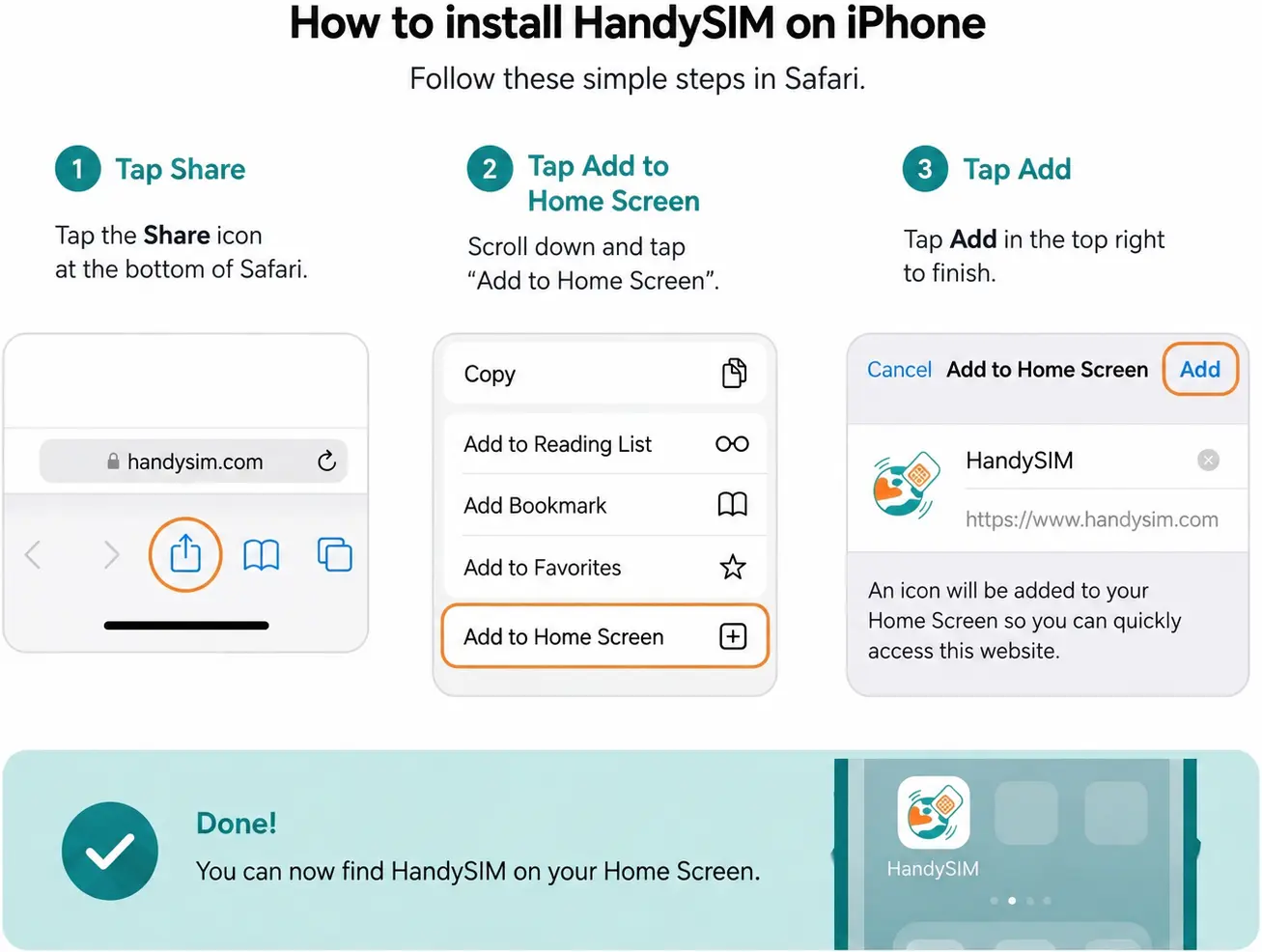
Install your eSIM in advance while you have stable WiFi at home. At many airports, WiFi networks require an SMS code or are overloaded.
➡ This way, you will have internet the second you land.
2. Turn on Data Roaming – but only for the eSIM
Many people worry about "roaming," but with an international eSIM, this is mandatory to connect to the local operator in Chile.
👉 Important: turn on roaming for the eSIM and strictly turn off roaming for your primary SIM card.
3. Lock mobile data to the eSIM
Go to settings and set the eSIM as the primary line for cellular data.
➡ This prevents the phone from accidentally switching to the primary SIM and generating high bills.
4. “Full signal ≠ Internet” – don’t be misled
You might have a full signal, but the internet may not work due to a congested cell tower.
➡ Solution: toggle Airplane Mode on/off or restart your phone.
5. 5G is not always the best choice
In many parts of Chile, 5G is more unstable than 4G. If the internet is slow, manually switch to 4G (LTE) for a more stable connection.
6. Download offline maps (Mandatory)
Google Maps allows you to download entire regions. This is critical for mountains, islands, and long desert trips.
7. Don’t rely on hotel WiFi
It often works well only in the lobby or is overloaded in the evening. Your eSIM is the primary internet; WiFi is only for large files.
8. Turn off automatic updates
Apps in the App Store or Play Store can consume your entire package in minutes. Set them to update only via WiFi.
9. Be careful with hotspot sharing
Sharing internet consumes a lot of data and drains the battery rapidly. Use it only in case of emergency.
10. Power Bank = Mandatory
GPS and constant signal searching in remote areas of Chile will drain your battery in half a day.
11. Keep the QR code
Take a screenshot of the installation QR code and save it in your email. If you lose your phone or need to reinstall, this will save you.
12. Do not delete the eSIM
An eSIM is a one-time installation. If you delete it from settings, it cannot be recovered automatically—you will need a new package.
13. Do not install through Instagram / Facebook
In-app browsers often interrupt the installation process. Use Gmail, Safari, or Chrome directly.
14. Manually select an operator if needed
If Automatic Network selection is poor, go to Settings -> Network selection and pick Entel or Movistar manually.
15. Internet in nature is not guaranteed
Even the best operators lose signal in the Andes or the desert. Always have a Plan B (offline info).
16. Use WhatsApp as your primary channel
In Chile, hotels, taxis, and tour agencies operate almost entirely through WhatsApp.
17. Avoid public WiFi for payments
Open networks are a risk. Use your mobile data for banking and payments.
18. Airplane Mode trick
If the signal "freezes," toggle Airplane Mode on and off. This resets the connection to the nearest tower.
19. Monitor your usage
Regularly check Settings -> Data usage so you don't run out of megabytes at an inconvenient moment.
20. Always have a Plan B
Keep offline maps downloaded, the hotel address written down, and some cash on you. Internet can fail anywhere in the world.
If Chile is just the beginning of your adventure, check out plans for neighboring countries. Connectivity in South America is easier with a trusted partner:
➡ Using a regional plan is extremely convenient if you cross borders frequently, as you don't have to change settings in every country.
Chile is an incredible destination but logistically complex due to its geography. The internet in the country is excellent in cities but can completely disappear in the wild. Planning your connection in advance via eSIM gives you stability, cost control, and security for every move.
Yes, Chile has excellent mobile internet with widespread 4G and developing 5G coverage. In Santiago, speeds are world-class, but in remote regions of Patagonia, the signal is weak or non-existent. Most tourists realize this too late.
Yes, the digital SIM card is fully supported and is the most modern way for tourist connectivity. It allows for the activation of mobile data immediately upon landing, without the need for physical registration or visiting a local office.
Yes, roaming for international cards in Chile is extremely expensive due to the long distances and tariff zones. Prices per megabyte can lead to massive bills. This is the most common mistake tourists make in Chile.
Yes, the 5G network is active and expanding rapidly in Santiago, Valparaíso, and other major urban centers.
Entel is the leader regarding coverage in mountains and rural areas, while Movistar offers an excellent 5G network in cities. If you plan to travel outside the capital, your international eSIM must have access to the Entel network for maximum security.
Yes, an eSIM for Chile is the more practical choice because you avoid the complex SAE device registration system and language barriers in offices. This is the best choice for internet in Chile for tourists, as you get a connection immediately without wasting time on administrative procedures.
Usually, no. Prices at the airport are much higher, and the queues are enormous. Installing your digital SIM card in advance saves you stress and allows you to be online as early as passport control.
For Patagonia, it is critical to combine a reliable eSIM for Chile with pre-downloaded offline maps. In national parks, the signal often disappears, so mobile data will serve you primarily in towns and base camps. Always check if your plan allows for automatic switching to the strongest available operator.
For a standard 10-day trip using Google Maps, social media, and WhatsApp, a package of 10GB to 20GB is optimal. Chile is an exceptionally beautiful country and you will be uploading many photos, so it is good to have a data reserve. Most tourists underestimate data consumption on social media.
The most secure method is activating your international eSIM before departure. The moment you land in Santiago, your phone will connect to a local network. This allows you to immediately order secure transport (Uber/Cabify) and avoid unlicensed taxis at the exit. This is the fastest way to have internet in Chile without risk and without wasting time.